Collins Muna
Mentee, Lamu County.
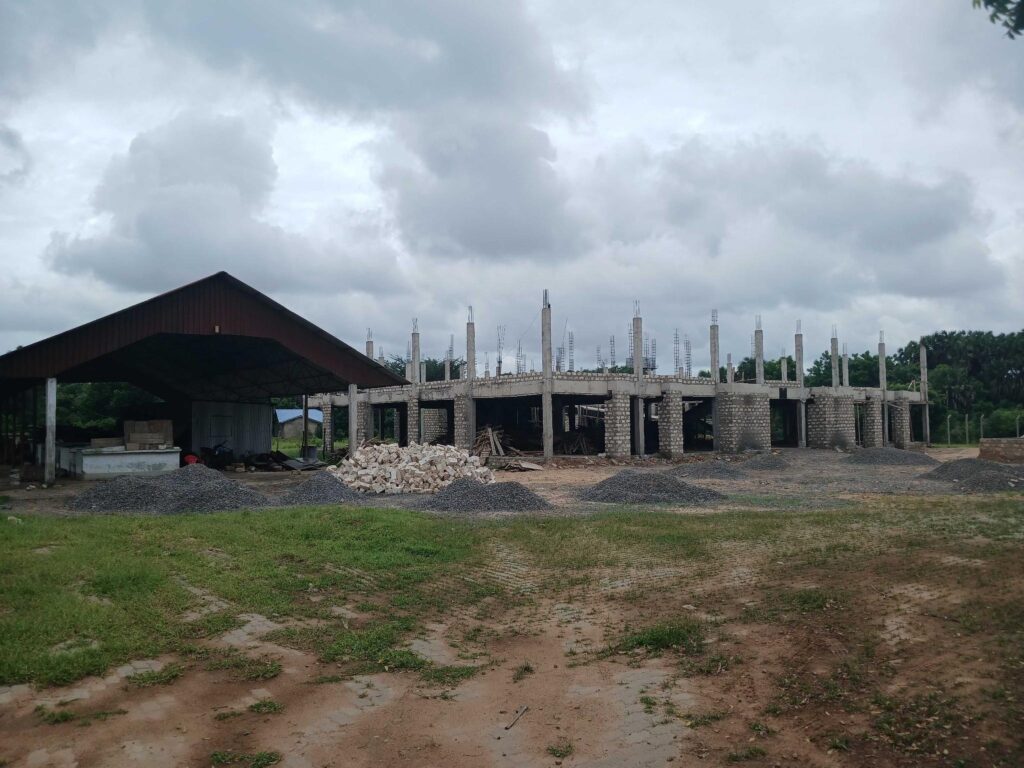
In the quiet, windswept plains of Lamu County, the dust kicked up by excavators at the site of the new Hindi Market carries with it more than just the promise of commerce—it carries the weight of a community’s divided hopes.
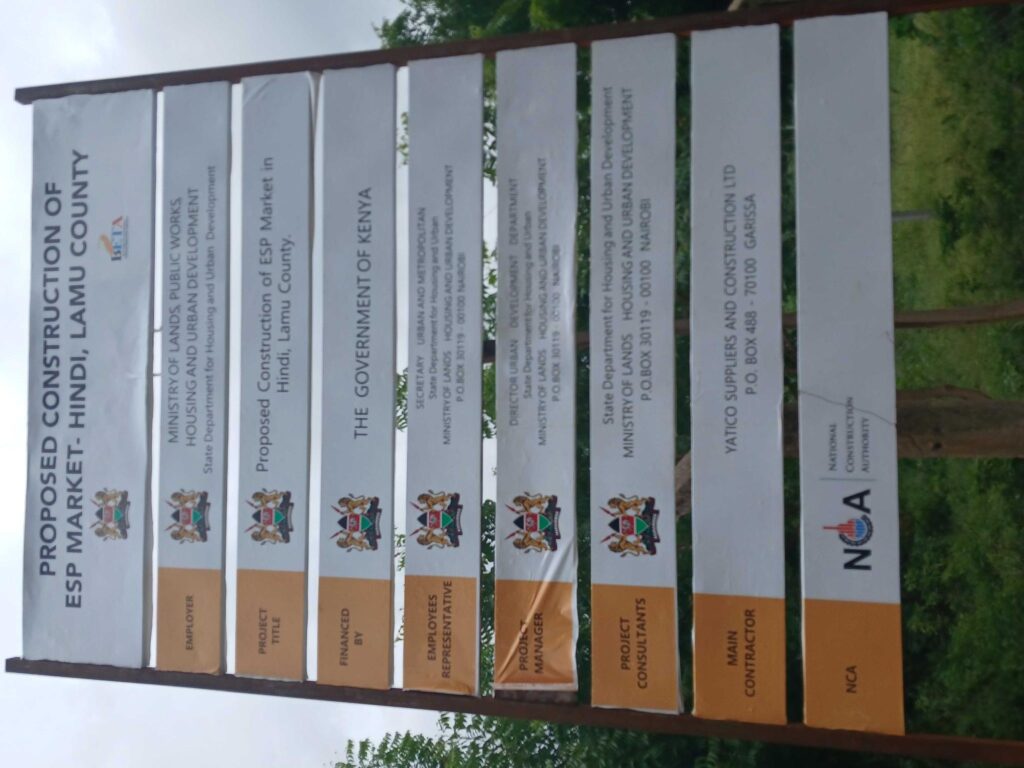
For years, the people of Hindi ward have felt sidelined by regional development. When the national government, championed by Women Representative Hon. Monica Marubu, announced the Ksh 100 million project, it was heralded as a long-awaited lifeline. Yet, as the structure rises, it has become a lightning rod for intense debate, pitting the desperate need for local infrastructure against painful memories of past administrative missteps.
Voices of Anticipation
For residents like Mama Grace Wambui, the new market is not just a building; it is a remedy for a history of neglect. ‘Soko ilijengwa Mokowe na sisi tuko Hindi, sioni ubaya tukijengewa hapa Hindi,’ she explains. To her, the existing market in Mokowe—a facility meant to serve the region—has proven to be a ghost town for the people of Hindi. ‘Kwa sababu hiyo ya Mokowe haitusaidi. Mama Marubu amefanya vizuri sana kututetea watu wa Hindi’ (The market was built in Mokowe, yet we are in Hindi; I see no harm in having one built here in Hindi because the Mokowe one does not help us. Hon. Marubu has done a great job advocating for the people of Hindi).
This enthusiasm is shared by the local youth, who view the project as the tangible realization of political promises. Maina Kimotho, a representative of the local youth, stood by the construction site and remarked, ‘Soko sahii linajengwa tumefurahi kuona kiongozi wetu Mama Marubu aliongea na kutenda’ (The market is being built right now, and we are happy to see our leader, Mama Marubu, speak and act).
The Shadow of the Idle Market
Yet, not everyone shares in the celebration. Hovering over the excitement is the stark reality of an existing market facility within the same ward, implemented by the County Government. It has stood as a hollow shell since 2021—a silent, non-operational reminder of failed planning.
The Lamu Arts and Theatre Alliance, a local community-based organization, has become the voice of this dissent. They argue that the issue isn’t whether Hindi needs a market, but whether it needs a new one while the old one remains abandoned. Their concern is rooted in sustainability and fiscal responsibility. They contend that the government’s focus should have been on revitalizing the existing, dormant infrastructure before pouring millions of shillings into a new project that risks suffering the same fate.
A Litmus Test for the Future
As the main contractor, Yatico Suppliers and Construction Ltd, continues to assemble the ESP Market, the site has become more than a construction project; it is a battleground of community priorities. On one side, a community hungry for localized development, exhausted by the inadequacy of projects built far from their reach. On the other, a cautious citizenry, tired of seeing public funds swallowed by projects that do not provide long-term utility.
The outcome of the Hindi Market will serve as a litmus test for Lamu County. Will it be the beacon of economic empowerment that proponents promise, or will it join the ranks of abandoned white elephants? As the project moves forward, the people of Lamu watch with both hope and caution, waiting to see if their leaders will finally bridge the gap between promises made and the reality delivered.
On-going Hindi Market in Lamu County. Hindi ward.