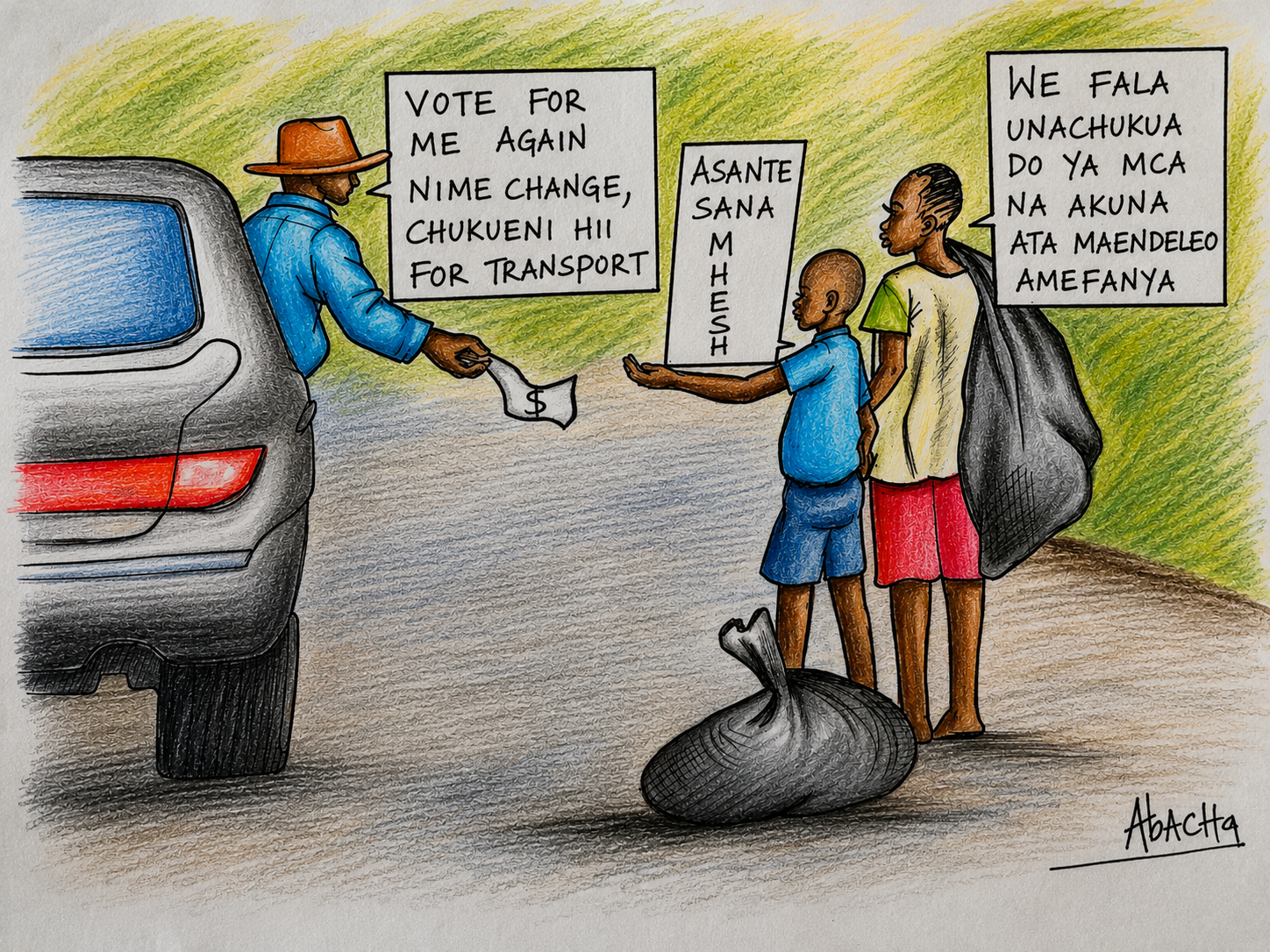
As the next election season draws closer, a troubling pattern is beginning to take shape beneath the noise of campaigns and promises: growing voter apathy, fueled by deepening public distrust in the political system. In many communities, elections are no longer seen as moments of civic power, but as short-lived auctions where votes are traded for survival. Voter bribery; once whispered about, has now become an open secret. From “transport refunds” to direct cash handouts, the dignity of democratic choice is increasingly being replaced by immediate, transactional gain.
Yet beneath this surface issue lies something even more unsettling: the contradiction between what leaders demand from citizens and what they themselves practice.
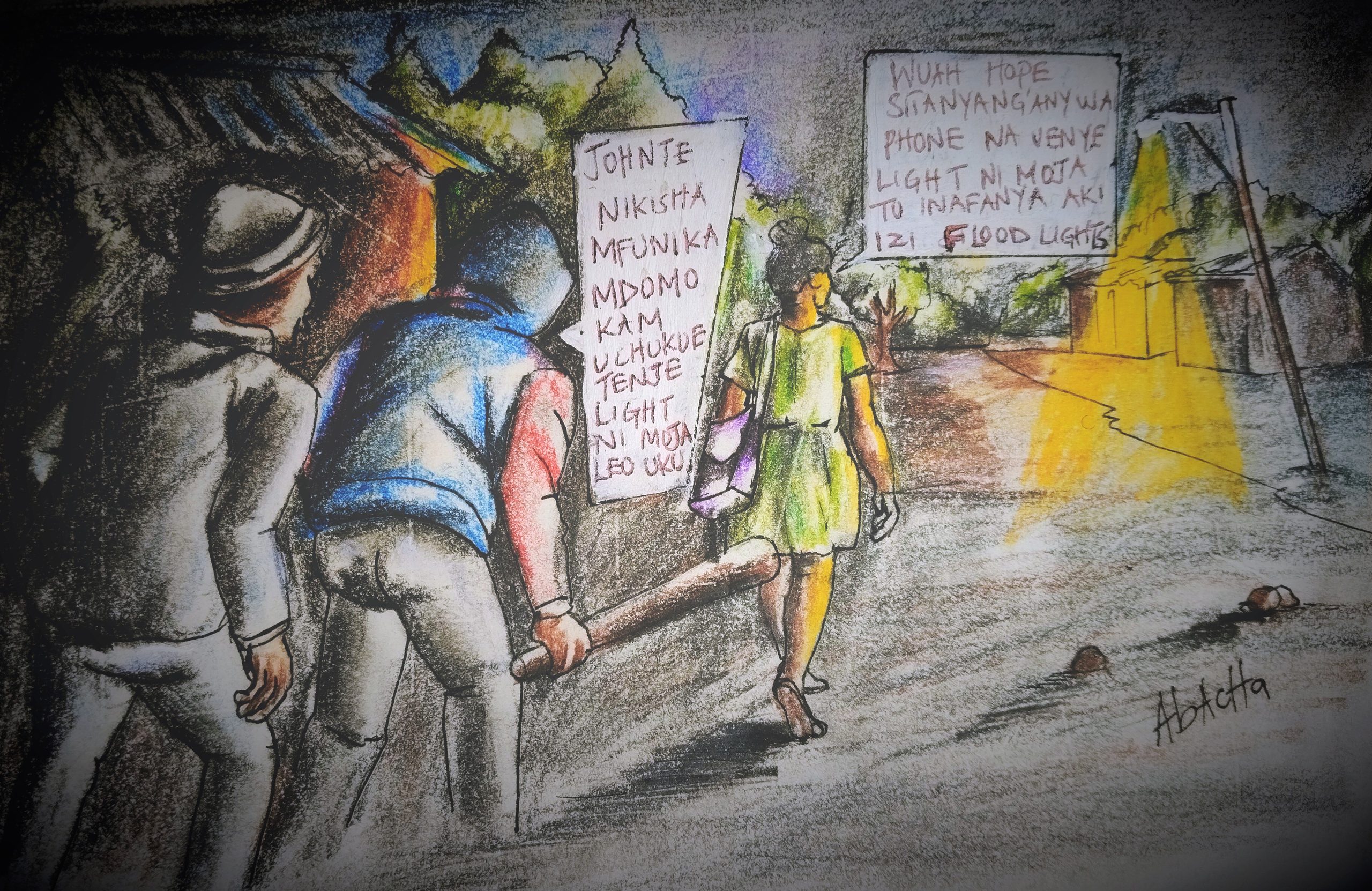
How is it that politicians, who are entrusted with state protection, are increasingly surrounded by ‘private security’ often informal, sometimes militant, and in some cases resembling hired goons, while at the same time calling on citizens to trust public institutions such as the police?
This contradiction raises difficult questions. If public security is trustworthy enough for citizens, why is it not trusted by those who make laws and govern the same systems?
There is a growing perception in communities that some political actors fear accountability more than insecurity. Instead of strengthening public trust in institutions, they appear to replace formal protection with loyalty-driven enforcement structures; “the boscos” where obedience is guaranteed not by law, but by money and survival.
Across parts of western Kenya, people refer to these groups as “Boscos” a slang term often used to describe individuals who are constantly present around political figures and perceived as loyal enforcers. The name draws from the image of local dogs that are always around and willing to “eat anything.” While the term is informal and carries different meanings depending on the community, it reflects a broader public perception that political loyalty is increasingly purchased rather than earned, and that protection is sometimes associated more with personal allegiance than institutional authority.
Within this already fragile environment, concerns about the commercialization of politics are becoming even more explicit. Mariam Abdalla, a human rights defender and budget facilitator in Kisumu, captures the depth of the problem in stark terms:
“In Kisumu right now, the gubernatorial seat is worth 1000 shillings, Member of Parliament 200, and senator 500. Without that, there is no audience.”
Her words reflect a disturbing normalization where political engagement is increasingly filtered through immediate financial exchange. In such a system, access to citizens is not earned through ideas, debate, or accountability, but through the ability to pay for attention.
The OCS of Obunga Police Station, Frederick Onjuka, recently observed that: “Next year’s election will be very different from others. The issues of voter apathy will be very high.”
His statement reflects what many on the ground already feel. Disengagement is rising. People are withdrawing not because they do not care, but because they feel their participation changes little. When votes are bought, and outcomes feel predetermined by power and influence, apathy becomes a form of silent protest.
Community members echo similar frustrations. One resident in Kisumu noted that election periods now feel less like democratic exercises and more like “seasonal economies of survival,” where desperation is monetized and hope is temporary.
A youth leader added that many young people no longer see elections as meaningful:
“Why should I queue for hours to vote, when someone else decides my value in seconds with a handshake and a note?”
At the center of this crisis is not just voter bribery, but a deeper erosion of trust between citizens and leaders, between institutions and the people they serve.
Unless this cycle is broken, Kenya risks entering a political future where elections are highly organized but deeply hollow, procedurally correct, but socially disengaged.
Restoring trust will require more than voter education campaigns. It will require accountability that is visible, consistent, and equal where public institutions are strengthened, not replaced; and where leadership is defined not by control, but by integrity.
Because democracy does not collapse overnight. It fades slowly. each bribe accepted, each trust broken, and each voter who decides their voice no longer matters. And when that silence becomes too loud, elections stop being a choice and become just another ritual.