In Ogango, a growing center within Kisumu East Constituency, insecurity is steadily reshaping daily life and livelihoods, with residents saying the situation worsens as soon as darkness falls. What should be productive evening hours for small traders and workers has instead become a time of fear, forcing many to shut down early and retreat to safety.
Yvonne Auma, a bhajia seller operating next to Ogango Primary School, has run her business since 2016. For years, she would comfortably serve customers into the night, often closing at 9 p.m. before walking home. Today, that routine feels like a risk she can no longer afford to take.
Her voice carries both frustration and exhaustion as she reflects on how much has changed. “Saa hii siwezi kaa mpaka usiku kama kitambo,” she says. “By 7 nimeshafunga juu si safe.”
A mother of three, Yvonne says the early closures have directly affected her income, making it harder to provide for her children. She notes that insecurity, combined with the absence of street lighting and poor road conditions, has created an environment where operating a small business at night is nearly impossible.
Despite living in Elgons, just a walking distance from her business, she now has to spend part of her daily earnings on transport for safety.“Nilikuwa natembea tu nikienda home, but saa hii lazima nichukue boda,” she explains. “Ni pesa kidogo lakini lazima nijilinde.”
For Janet Akeyo, who roasts maize in the same area, the fear is just as real even if she hasn’t personally experienced an incident. She says the darkness alone is enough to worry anyone, especially with the stories circulating within the community.
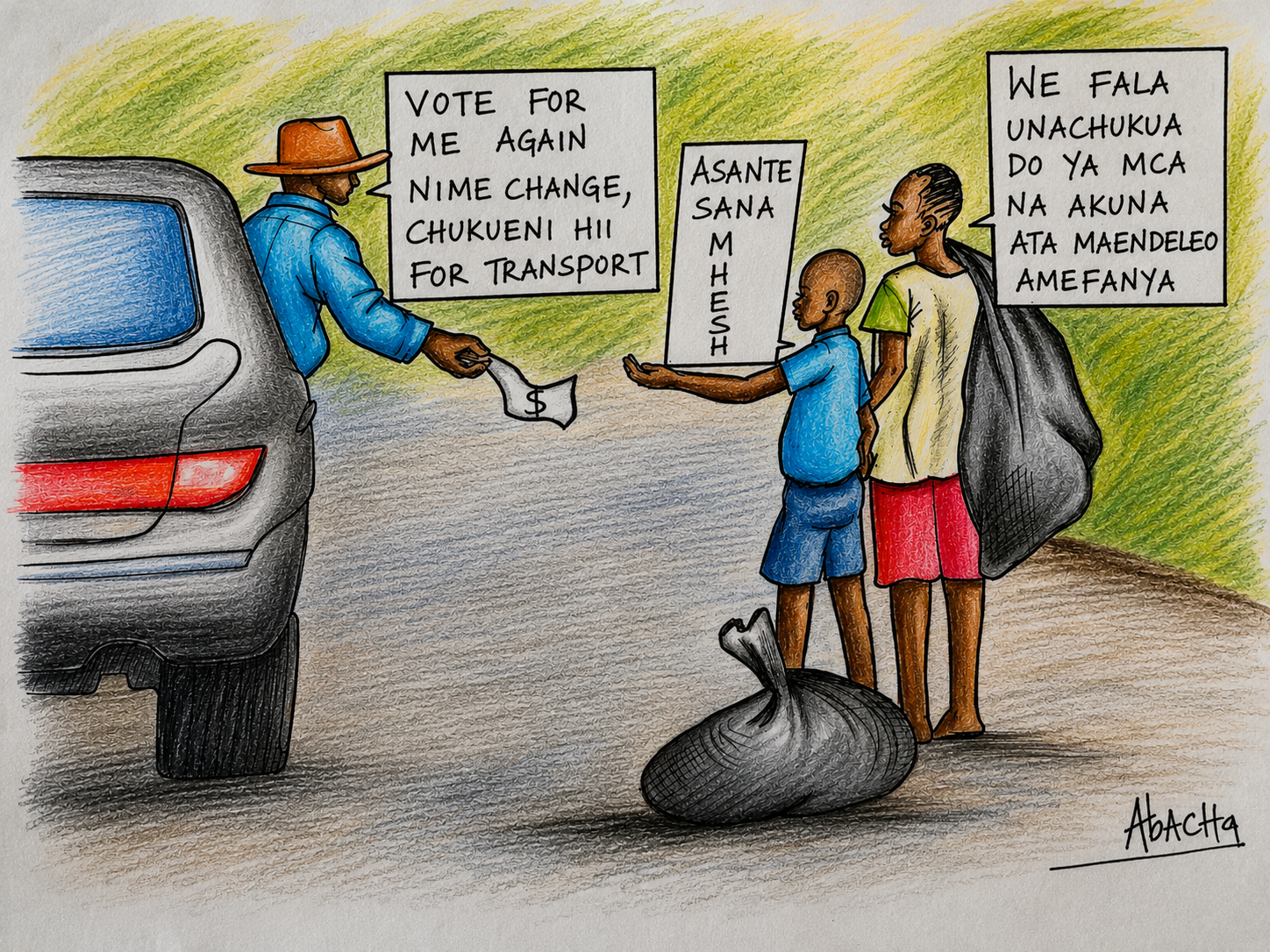
Janet, now a resident of Ogango, admits that she still votes in a different constituency despite working and living in the area, a reality that opened up a deeper conversation around civic responsibility and local accountability. After a brief civic conversation, she acknowledges the importance of representation and agrees that she would consider transferring her voter registration to Kisumu East, Ogango, so her voice can be part of local decision-making. Her reflection points to a wider issue of civic disconnect that often affects local accountability and development priorities.
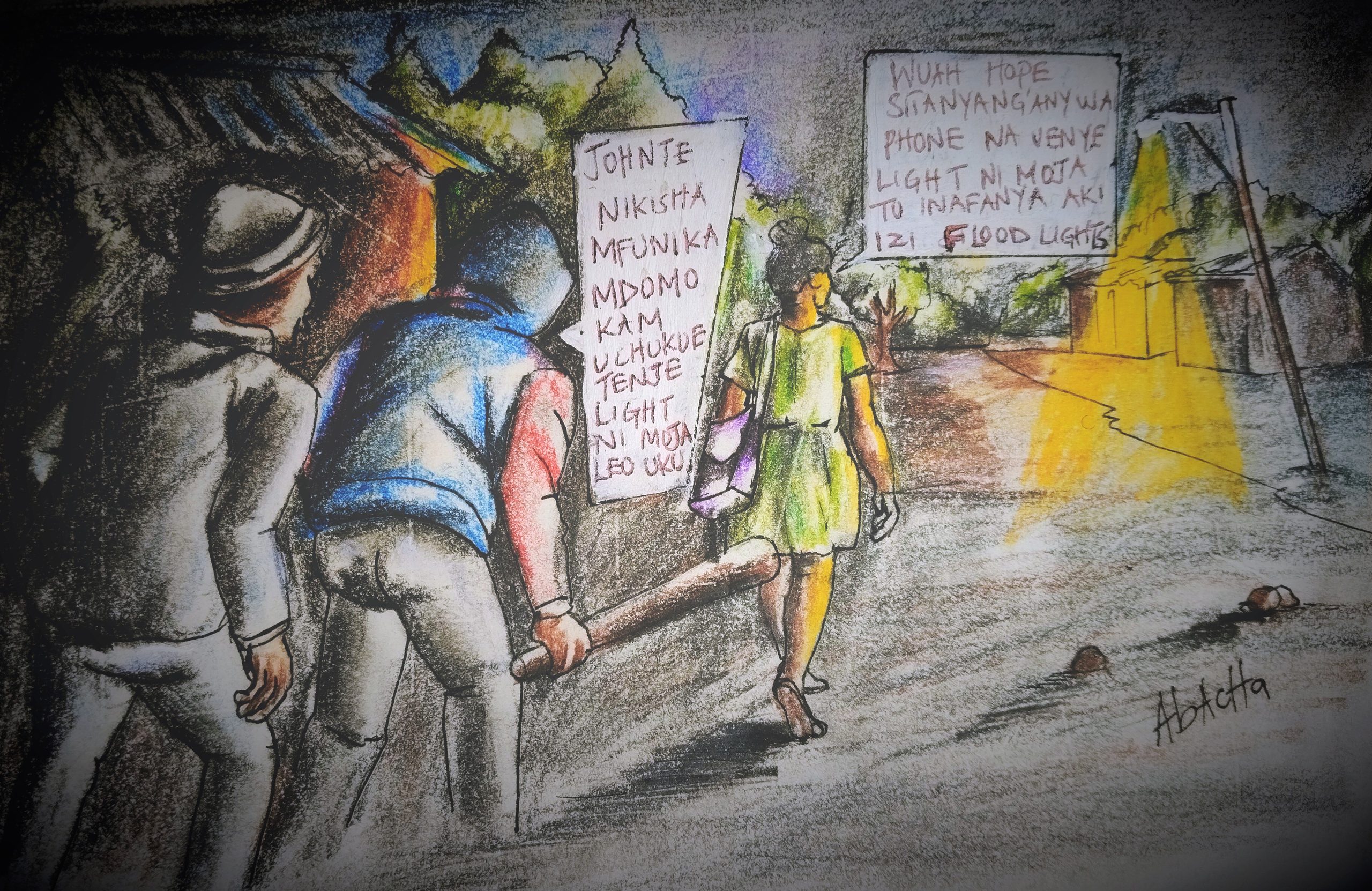
She also recalls that the floodlight near Star Hospital once brought a sense of security to the area, but notes that it has not been functional for nearly two years. Its absence, she says, has contributed significantly to the current insecurity.
For boda boda riders, the situation is equally challenging. Brian Mutheu, who operates at the Ogango base, says the insecurity has not only limited their working hours but also affected trust between them and the community.
He explains that after 9 p.m., which would normally be peak business hours, movement significantly reduces. Certain routes, especially towards Star Hospital, have become too risky even for the riders themselves.
“Hiyo barabara ya Star Hospital ni giza sana,” Brian adds. “Hata sisi tunaogopa kupita juu ya kuibiwa.”
The experiences shared by residents point to a broader issue that goes beyond isolated incidents of crime. Insecurity in Ogango is now affecting livelihoods, limiting economic activity, and altering how people interact with their environment. The lack of street lighting, poor road infrastructure, and delayed maintenance of existing facilities such as floodlights are repeatedly cited as contributing factors.
For many residents, the situation reflects a gap in service delivery and urban planning in an area that continues to grow in population and economic activity. As more people settle and businesses emerge, the need for safe and well-lit public spaces becomes even more critical.
Speaking after a recent Joint County Security Committee meeting, County Commissioner Ramadhan Mwabudzo said security agencies had intensified operations against criminal gangs and warned that those behind violent robberies would be pursued relentlessly.
“We are looking for them one after another. We will not allow criminal gangs to terrorise residents or undermine the peace that Kisumu has worked hard to build,” Mwabudzo said.
The county security team also announced plans to strengthen community policing, increase patrols in identified crime hotspots, and work closely with local administrators and residents to improve information sharing and response to criminal activity.
On the county government’s side, Kisumu City Manager Abala Wanga has previously stated that the county is implementing programmes to improve urban infrastructure, including the rehabilitation of street lighting and public spaces, noting that functional lighting is essential not only for mobility but also for public safety and business growth.
Despite these assurances, residents of Ogango say they are yet to experience the changes promised. They argue that while security meetings and development plans are important, the true measure of progress is whether traders can keep their businesses open after sunset and whether ordinary residents can walk home without fear.
What emerges from Ogango is not just a story of fear, but one of resilience under pressure; traders adjusting their hours, riders navigating risk, and residents rethinking their civic participation. Yet, behind that resilience is a clear and urgent call for action.