Community engagement forums continue to serve as critical spaces where residents speak openly about the realities shaping their daily lives. In Manyatta B, Kuoyo area, on 20th of February 2026, such a gathering brought together youth and community members to reflect on the growing insecurity that has gripped sections of the neighbourhood; particularly the stretch from Kasawino to Yellow Bridge. What emerged was not just concern, but frustration, fear, and a sense of abandonment.
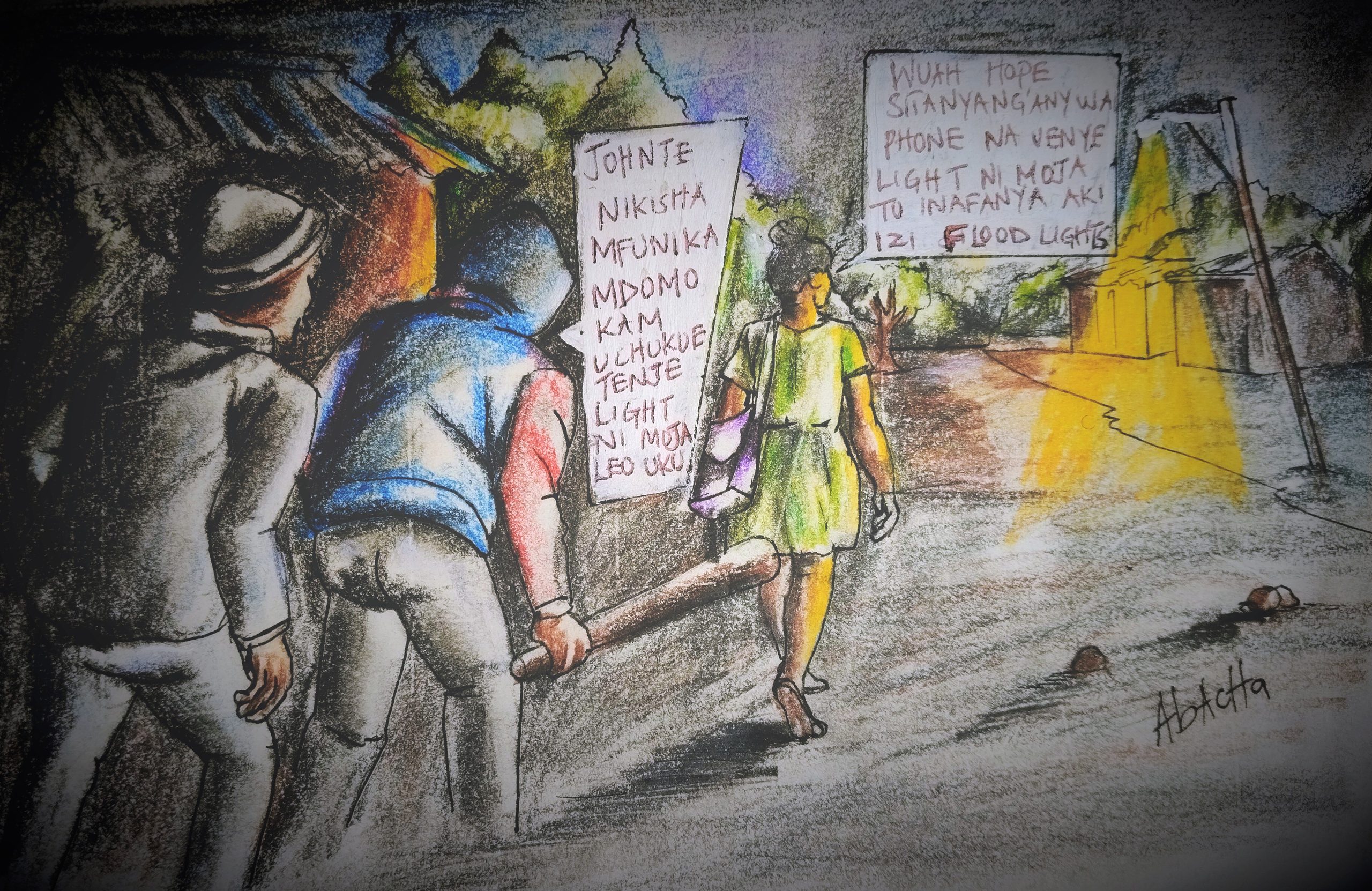
During the engagement, young people narrated how the once-busy pathway between Kasawino and Yellow Bridge has increasingly become a hotspot for criminal activity, especially at night. Cases of muggings, phone snatching, and violent attacks have reportedly become frequent, forcing residents to adjust their movements and, in some instances, stay indoors after dark. For many who depend on evening businesses or late work shifts, this insecurity has directly affected their livelihoods.
Patrick, a youth from the area, shared how the situation has pushed young people to take matters into their own hands. “We have tried to reach out to our leaders so that we can sit down and find a way forward, but they have not shown up,” he said. “So we formed a group to patrol at night. We cannot just watch as our people are attacked every day.”
The formation of informal night patrols reflects both resilience and desperation. While the youth say they are motivated by a desire to protect their community, the risks involved are significant. Without proper training, equipment, or legal protection, these young volunteers expose themselves to potential violence. Yet, according to several participants, police presence in the area remains minimal and response to reported incidents has been inconsistent.
Residents expressed concern that the lack of coordinated security efforts could escalate tensions or lead to unintended consequences. Some emphasized the need for structured community policing initiatives, better lighting along dark stretches, and regular security patrols from law enforcement agencies. Others called for open dialogue between elected leaders, security agencies, and youth representatives to create sustainable solutions rather than leaving young people to shoulder the burden alone.
Beyond physical safety, the residents highlighted the broader socio-economic context fueling insecurity. High unemployment rates among youth, limited economic opportunities, and inadequate recreational spaces were cited as contributing factors. Many argued that addressing insecurity must go hand in hand with tackling unemployment and creating meaningful engagement programs for young people.
The engagement concluded with a renewed call for accountability and leadership responsiveness. Community members urged local leaders and security authorities to prioritize the safety concerns raised and to actively participate in forums convened by residents. The youth patrol initiative, while well-intentioned, was described as a temporary measure; not a substitute for institutional responsibility.
The Manyatta B engagement reaffirmed a simple but powerful truth: when communities organize to speak about insecurity, they are not merely reporting crime…they are demanding dignity, protection, and inclusion in decisions that affect their safety. Whether those demands are met now depends on the willingness of leadership and security agencies to listen, act, and restore trust before fear becomes the norm.